Differences Between Agile and DevOps: All You Need to Know

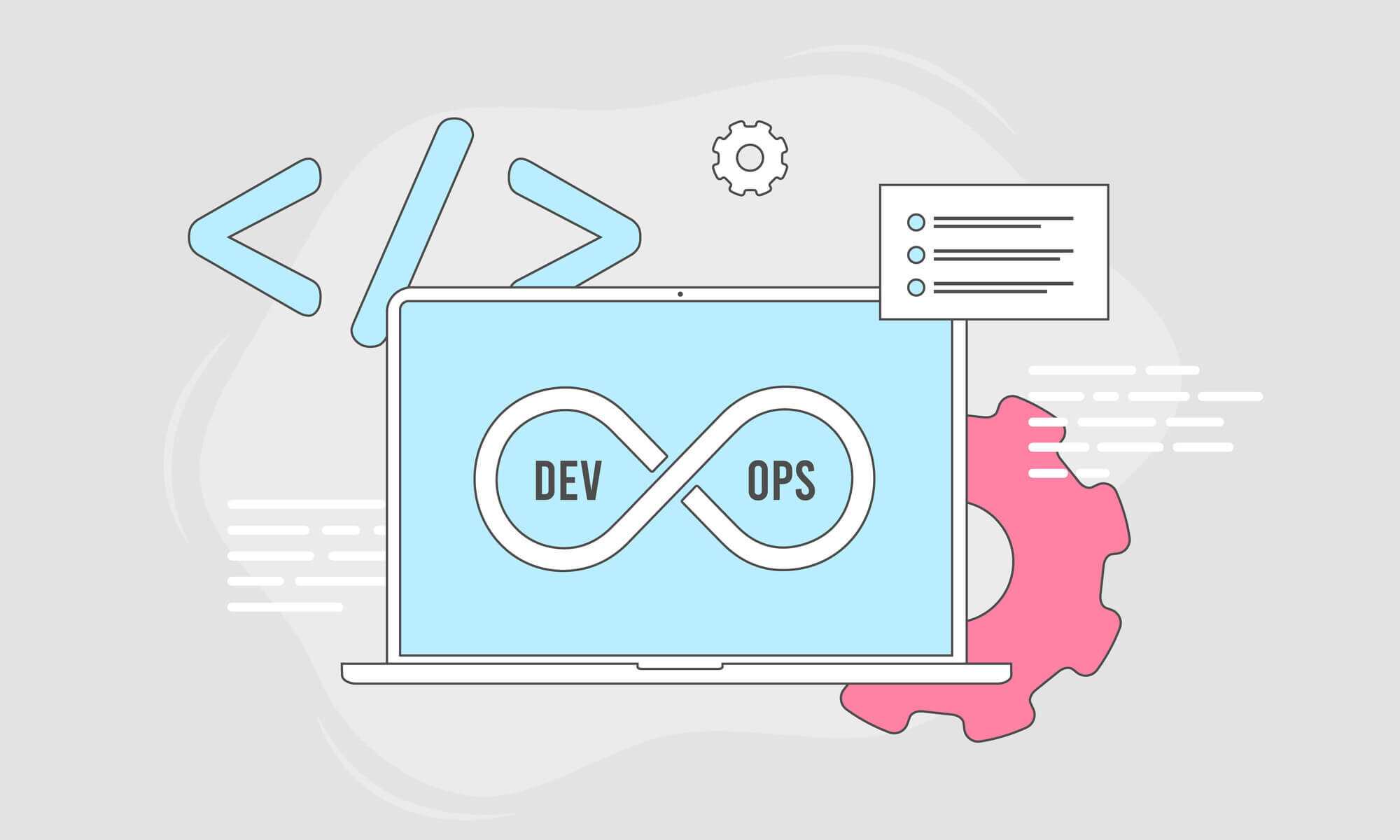
illustration of agile and devops methodologies

Sometimes, retrospectively looking back on how software development and IT operations have evolved over the years is important. Over the last several years, we have seen the rise to prominence of two key methodologies: Agile and DevOps.

Nowadays, these terms form part of the everyday vernacular for organisations leveraging complex software development. While these terms are often mentioned in the same breath, it’s important to isolate some of their distinct characteristics and applications, as those new to this terrain may need clarity.

As a leading Agile and DevOps recruitment agency for technical contractors, we at ClearHub felt it prudent to break down the key differences and similarities between Agile and DevOps, and explain why understanding both is critical for businesses today.

Understanding Agile

Agile emerged in the early 2000s as a response to traditional, rigid development methodologies. 

At its core, Agile is an iterative approach to project management and software development that emphasises:

      1. Collaboration and customer feedback
      2. Rapid, incremental releases
      3. Flexibility and adaptability to change

In an agile approach, some planning and design tasks are done upfront, but the development is executed incrementally in close collaboration with key stakeholders. Changes are incorporated continuously and usable versions of products are often released quickly compared to those developed through tried-and-tested waterfall methodologies.

The Agile Manifesto, which outlines the methodology’s principles, prioritises four key values:

      1. Individuals and interactions over processes and tools
      2. Working software over comprehensive documentation
      3. Customer collaboration over contract negotiation
      4. Responding to change over following a plan

Agile methodologies, such as Scrum and Kanban, have drastically influenced how modern software development teams work, allowing them to deliver value to customers more quickly and efficiently.

Understanding DevOps

While Agile focused primarily on improving the development process, it became apparent that there were missing pieces of the puzzle on the operations side.

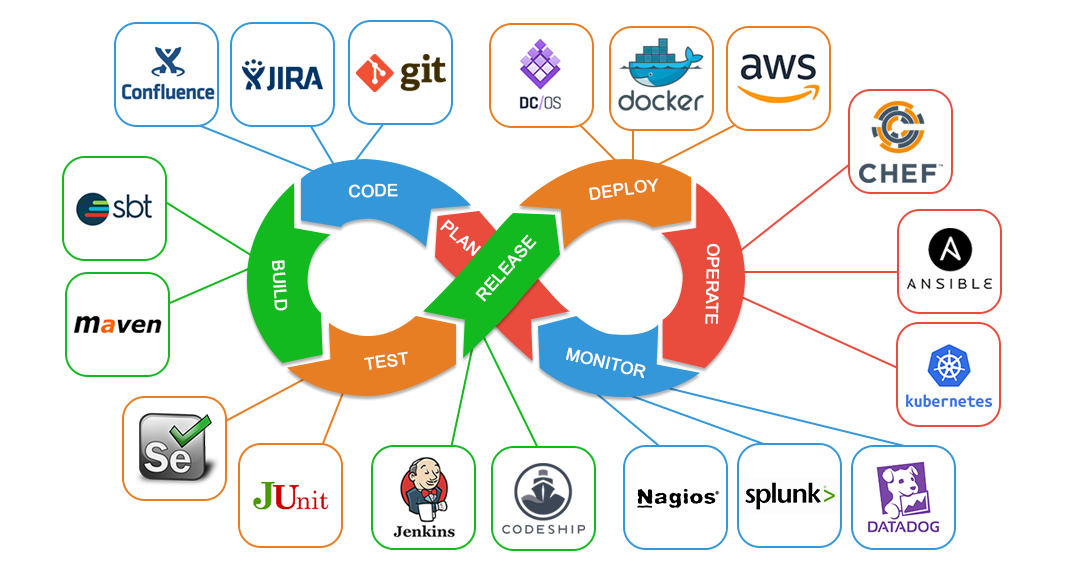
Enter DevOps, a methodology that aims to bridge the gap between development and operations teams. It is a methodology that enables teams to build, test, and release software much more reliably and quickly by incorporating agile principles.

DevOps is an approach that:

      • Aligns development and operations teams
      • Emphasises automation and continuous delivery
      • Focuses on the entire software lifecycle, from development to deployment and maintenance

DevOps engineers attempt to break down silos between teams, fostering a culture of collaboration and shared responsibility. This approach leads to faster deployment times, improved quality, and more reliable software products.

The DevOps “Three Ways” are as follows:

      1. Systems thinking – Understanding that software applications are complex systems
      2. Amplifying feedback loops – Improve bidirectional communication between teammates
      3. Cultural change – Culture of continuous experimentation and learning

Key Differences Between Agile and DevOps

While Agile and DevOps share some common ground, there are several key differences:

      1. Scope: Agile primarily focuses on the development process, while DevOps encompasses the entire software lifecycle, including operations.
      2. Team composition: Agile typically involves developers and product managers, whereas DevOps brings operations teams into the fold.
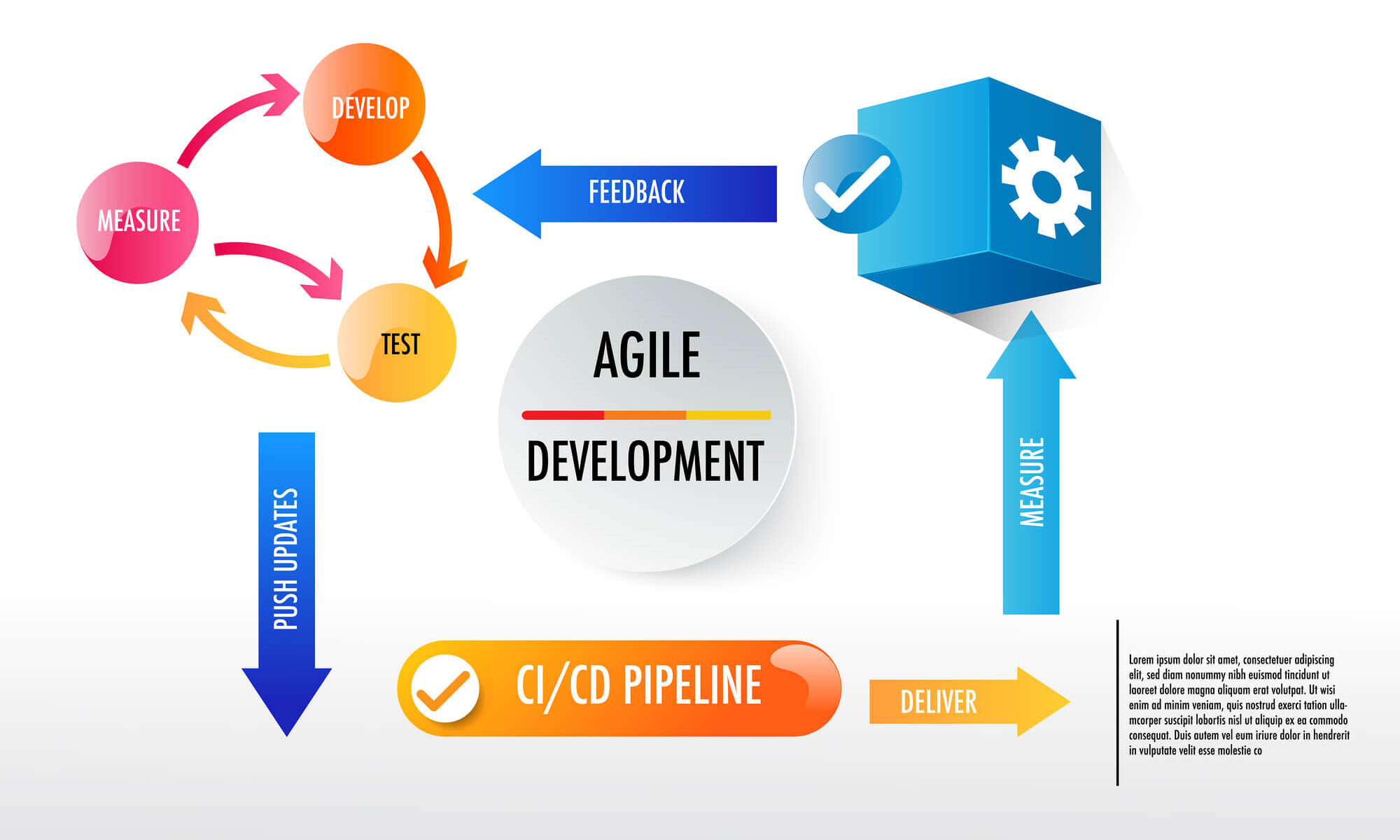
      3. Delivery focus: Agile emphasises iterative development and small batches, while DevOps places a strong emphasis on continuous integration and delivery through CI/CD pipelines.
      4. Automation: While both methodologies value automation, DevOps places a much heavier emphasis on automating the entire pipeline, from testing to deployment.
      5. Feedback loops: Agile focuses on customer feedback for product improvements, while DevOps extends this to include operational feedback for system optimisation.

Similarities Between Agile and DevOps

Despite their differences, Agile and DevOps share several common principles:

      1. Both methodologies stress the importance of fostering teamwork and breaking down operational silos
      2. Agile and DevOps both advocate for the ongoing refinement of processes and products.
      3. Both prioritise delivering value to the end-user quickly and efficiently.
      4. Agile and DevOps both emphasise the ability to adapt to changing requirements and circumstances.

In many ways, DevOps can be seen as an evolution of Agile principles, extending them beyond the development team to encompass the entire software delivery pipeline.

Why Understanding Both Matters for Your Business

In such a fast-paced software development market, businesses need to be able to deliver high-quality applications and products quickly and reliably. Understanding and implementing both Agile and DevOps methodologies can provide several benefits:

      1. Faster time-to-market through streamlined and collaborative processes
      2. Improved software quality thanks to continuous testing and feedback loops
      3. Increased efficiency through process automation and productivity among teams
      4. Quicker responses to market changes and customer needs
      5. Faster delivery of products leads to greater customer satisfaction and a better competitive edge for vendors

The Importance of Skilled Agile and DevOps Contractors

As businesses strive to implement Agile and DevOps practices, the need for skilled professionals who understand these methodologies becomes crucial. This is where ClearHub comes in. We specialise in connecting businesses with experienced DevOps and Agile contractors who have expertise in:

Whether you’re looking to implement Agile practices, build a DevOps culture, or need expertise in specific tools and technologies, our network of skilled technical contractors can help your business thrive in the modern software development landscape.

Hire Agile or DevOps Contractors Today

As you navigate the complexities of modern software development, remember that having the right talent is key to success. ClearHub is here to help you find the right skilled Agile and DevOps contractors for hire, who can take your projects to the next level. Contact us today to learn how we can support your business in implementing these crucial methodologies and remaining one step ahead of the competition.


Share this post

Top 4 Skills to Look Out for in DevOps Engineers

successful devops contractor meeting

Finding the right DevOps talent to accomplish a seemingly endless series of complex technical tasks has become a top priority for organisations. As businesses strive to increase agility and scalability with the use of enterprise-grade cloud architecture, adopting practices like continuous integration and continuous delivery (CI/CD) become highly sought-after. 

When such situations arise, organisations must be proactive and forward-thinking in their approach, seeking the help of experienced DevOps engineers to unlock new opportunities marrying software development and operations into a seamless, hybridised solution.

When the time comes to hire DevOps engineers, organisations must look for evidence that prospective talent can successfully implement the processes, tools, and philosophies required to accelerate ‌development processes reliably and securely. This will involve assessing DevOps engineers, consultants, software architects, GitLab and GitHub experts, and other niche DevOps applicants from many angles. Ultimately, not all DevOps engineer candidates will possess the right mixture of soft and technical skills to streamline operations and drive tangible results. 

When evaluating candidates – through DevOps recruitment specialists like ClearHub – make sure they demonstrate the following five essential qualities.

  1. DevOps Toolchain Proficiency

At its core, DevOps is about amalgamating development and operations tasks into unified, automated workflows through specialised toolchains. Junior and senior DevOps engineers should ideally have well-rounded expertise across a few essential pillars utilising a variety of common DevOps tools and practices, such as:

  • Source code management: in other words, tracking, merging and collaborating on code changes across distributed teams through tools like GitHub and GitLab.
  • Continuous integration: building, packaging, and testing code through automated pipelines using solutions like CircleCI or Travis CI.
  • Infrastructure as code: Programmatically managing infrastructure resources by using products like TerraForm. 
  • Continuous delivery: Streamlining the release and coordination of applications using tools like AWS and Azure DevOps.

Junior DevOps engineers may be less equipped than seniors, but rather than looking at each candidate as siloed specialists, look for applicants with demonstrative knowledge of tools across this toolchain. They could offer unique perspectives and insights into marrying incumbent tools from development through deployment.

  1. Cloud Platform and Services Experience

Cloud infrastructure has become the de facto standard for deploying modern applications through established DevOps practices. As such, prospective engineers must be overly familiar with some or all leading cloud computing platforms like AWS, Microsoft Azure, and Google Cloud, as examples.

Valuable cloud skills to look for include provisioning cloud services, configuring networking and security controls, managing cloud-native developer tools, and optimising costs through built-in services. Containerisation experience is also a huge plus.

Some engineers may be more familiar with one or two platforms, but even if they are well-versed in a stack different to your organisation’s incumbent one, that doesn’t mean they should be absolved from consideration. Strong DevOps engineers will have proven production experience deploying, managing, and monitoring applications on cloud platforms, and that expertise can be transferred to a new stack.

  1. Deep Understanding of CI/CD Pipelines

At the heart of DevOps is implementing robust CI/CD pipelines to streamline the entire application delivery lifecycle. From initial coding through to production deployment and monitoring, CI/CD pipelines in DevOps are crucial; as such, engineers should be well-versed in such philosophies and methodologies.

While your CI/CD pipelines may look different to those that a candidate is used to, evidence of CI/CD agility and flexibility is a vital clue. If they can demonstrate how they have designed and optimised certain pipelines before, using branching strategies and development models to facilitate continuous application delivery and optimisation, then there is hope that they can deploy the same for you.

Strong DevOps engineer candidates can also help upskill and coach team members on leveraging CI/CD tooling and following agile practices like version control, containerisation, test automation, and infrastructure as code (IaC). CI/CD leadership enables faster and more flexible feedback loops that are pivotal to improvement. 

  1. Transparent and Collaborative

While technical skills are crucial, hiring DevOps talent must involve an accurate, impartial assessment of their interpersonal abilities as well. Since DevOps engineers usually operate as a conduit between software developers and IT operations, bridging any gaps will prove vital if you are to reap the benefits of consistent workflows.

Empathy, patience emotional intelligence and being an adept communicator, active listener, and willing mentor allow DevOps engineers to break down silos to improve productivity. They must be able to clearly articulate processes and requirements to stakeholders and other teams of varying technical levels. They should also be willing to collaborate and share knowledge with the wider organisation, fostering a more transparent and welcoming culture that embraces innovation.

Hire Top Quality DevOps Contractors Easily Through ClearHub

Transforming software delivery lifecycles through DevOps is about people as much as it is about technology and processes. Complementing in-house teams with experienced DevOps contractors and resources can be the catalyst for long-term positive change, and help businesses achieve the next step in their scaling journey.

When partnering with an established recruitment firm like ClearHub, most of the initial legwork in candidate shortlisting, initial interviews, and background checks are all taken care of. 

Provided you have communicated the key DevOps technical and soft skills you need from candidates, ClearHub’s dedicated recruitment consultants will ensure that only the best possible talent is brought forward for consideration. This leaves you with less administration and paperwork to file through, ensuring that when you do speak to prospective DevOps talent, you’re best prepared to make your consultations and meetings productive and meaningful.

Let ClearHub connect you with a broad talent pool of established and vetted DevOps experts today, who are sure to make a positive difference to your software delivery processes. Contact us to see the available talent we have already vetted who could add value to your organisation today.

Share this post

Top Tips For Managing An Agile Software Development Team Remotely

agile software developer working remotely

The rise of remote and hybrid work arrangements has transformed how modern software development teams operate. With distributed DevOps and Scrum practices now the norm, effectively leading these geographically dispersed and virtual teams has become a critical skill for tech leaders.

Whether you’re a coach overseeing multiple distributed Scrum teams, or a hands-on engineering manager directing a team of international software development and cloud contractors, these top tips will help you get the most out of your remote Agile workforce.

Hiring the Right Agile Software Talent

Assembling a high-performing remote team starts with attracting the right candidates in the first place. Work closely with your HR and recruitment partners to craft job listings that appeal to experienced or entry-level Agile contractors and developers, depending on your needs.

Look for evidence that candidates can adopt the Agile methodology with confidence, rather than exclusively lean into their technical skills. If they display characteristics like strong asynchronous communication, self-discipline, and adaptability, you may find them a great fit for your Agile Development needs. See whether candidates can display evidence of conducting sufficient preparation, planning and sprints in line with the Agile development methodology. 

Additionally, sell candidates on your company’s ethos of valuing individuals (however remote) and collaboration over processes and tools. While highlighting your productivity and enhancement tools and assets is important, be sure to commit to the four primary values of Agile software development:

  1. Individuals and interactions over processes and tools
  2. Working software over comprehensive documentation
  3. Customer collaboration over contract negotiation
  4. Responding to change by following a plan

Attracting the best remote Agile talent requires highlighting why your organisation is an employer of choice. Be sure to emphasise that your remote development teams can complete projects on time and within budget, with complete peace of mind and minimal risk.

Onboard and Integrate Effectively

Onboarding new remote contractors and full-time hires is crucial for setting them up for long-term success on your Agile software teams. Craft a comprehensive remote onboarding programme that familiarises them with your incumbent tech stack, workflows, CI/CD pipelines, and communication preferences.

Arrange virtual meet-and-greets with key stakeholders, provide self-serve training resources, and pair new team members with experienced line managers, supervisors, and ‘buddies’ to ease the transition. Proactively check in during the first few weeks to address any early challenges or roadblocks. 

An effective way to ensure freelance Agile developers or contractors don’t feel left behind or ‘in the dark’ is to effectively eliminate the need for organisational hierarchy, particularly in those initial few months. Doing so will ensure they quickly feel part of your company culture, engaged, productive, and empowered to contribute.

Define Clear Goals and Metrics

Maintaining focus and accountability is essential when managing remote Agile software teams. Work with your reports to establish short- and long-term goals, KPIs, and milestones – then consistently track progress. Leverage in-house project management tools that allow you to visualise development sprints, roadmaps, and obstacles.

Furthermore, provide additional resources that may assist Agile workers in getting up to speed on areas that need improvement, or that they are uncertain about. 

Emphasise what ‘done’ looks like for specific tickets, deployments, features, or tasks, to ensure that remote work can be done on time and to the expected standard. Continually refine and improve these processes.

Leverage Best-in-Class Tools

Agile software development thrives on the right tools and technology, and this is especially true for remote teams. Equip your distributed workforce with a robust, integrated tech stack using enterprise-grade solutions like Atlassian to streamline workflows and maximise productivity. Leverage cloud-based development apps, integrations, and plugins that facilitate remote developer workflows.

Provide guidance on tool usage and best practices to drive productivity and remove unnecessary barriers, where applicable. Regular training and feedback loops will keep remote Agile processes running smoothly.

Facilitate Regular Check-Ins

Frequent one-on-one and team check-ins are critical when managing a remote Agile software squad. Carve out dedicated time to discuss status updates, recognising their strengths and positive contributions, while delicately discussing weaknesses or improvement areas with open-ended dialogue.

Solicit feedback on what you can do as a manager to better support your remote workers, both in terms of project progress and employee wellbeing. Additionally, foster a culture of transparency by encouraging contributions in daily standups, sprint planning huddles, and team meetings. 

Hire Agile Developers for Your Team

For many organisations, managing effective remote Agile software development remains a steep learning curve. Partnering with tech recruitment agencies like ClearHub can provide the Agile and DevOps expertise needed to accelerate your distributed team’s success.

ClearHub’s vast network of pre-qualified freelance Agile contractors, Scrum Masters, and DevOps consultants can rapidly supplement your in-house capabilities. Our dedicated recruiters vet candidates not just for their technical prowess, but also the soft skills essential for remote Agile collaboration. Whether you need an experienced Agile coach to upskill your permanent staff, or a Scrum Master to drive adoption across multiple distributed teams, ClearHub can match you with the right remote talent fit. 

Start optimising your workforce today and get in touch with ClearHub to discuss how an Agile contractor can be the asset you need to take your organisation to the next level.

Share this post

A Beginner’s Guide To CI/CD Pipelines

top-level illustration of devops processes

Among the many sought-after skills for software developers and IT staff today is having a solid grasp of CI (continuous integration) and CD (continuous delivery) pipelines and processes. CI/CD practices are essential for rapid, efficient modern software development – but for many businesses new to DevOps approaches, it can seem complex and confusing to get started with.

This introductory guide to CI/CD pipelines covers the key concepts needed for organisations to adopt CI/CD foundations and maximise contractor productivity. With specialist assistance from knowledgeable DevOps engineers, developers, and QA contractors hired through recruitment agencies like ClearHub, setting up impactful pipelines is achievable and can quickly add value.

Understanding The Fundamentals of CI/CD

CI/CD pipelines refer to a series of steps that must be performed in any software development lifecycle (SDLC). Such a pipeline is geared towards improving software delivery via automation.

More specifically, CI/CD merges:

  • Continuous Integration (CI): developers commit code changes frequently to share a central repository, with automated building and testing against each change to catch errors early. This enables the rapid identification and fixing of bugs.

  • Continuous Deployment/Delivery (CD): new features and updates are automatically and regularly built, tested, and deployed to staging/production environments for end users. Automating deployments minimises risk and quickens delivery.

CI/CD systems thus form the backbone of modern software development and DevOps methodologies, bringing IT and software operations closer together in collaboration.

Most traditional CI/CD systems are designed for pipelines using virtual machines, but cloud-native application software development can also make a reliable environment for a CI/CD pipeline deployment.

Key benefits organisations gain from CI/CD adoption include (but are not limited to):

  • Faster innovation and delivery of new features to stay competitive
  • Accelerated feedback cycles to reduce risk
  • Increased developer productivity thanks to automated workflows
  • Improved trust and collaboration across software teams

A Prevalent Pain Point: Lack of CI/CD Know-How

While impactful, CI/CD tooling requires significant effort and resources to define and implement strategies aligned with an organisation’s systems. 

Without proprietary expertise and familiarity, resource-strapped IT teams often struggle to experiment and establish reliable CI/CD foundations.

Frequent questions and challenges faced by CI/CD beginners often encompass:

  • What specific tools do we need to set up – GitLab, Bitbucket, ChatOps etc.? How do we evaluate options?
  • How do we integrate CI/CD with our current stack (e.g. Atlassian, Jira, or others)?
  • Where should we start? Defining pipeline stages, testing scope, environment configuration, or elsewhere?
  • What level of test automation should we implement from day one?
  • How do we ensure application stability and recover from pipeline failures?

While complex to answer alone, seasoned DevOps and Agile contractors have proven expertise with CI/CD patterns and real-world experience to rapidly help teams through these pain points.

How CI/CD Supports DevOps

A continuous integration pipeline improves code quality by ensuring any changes go through the same validation and testing processes on the same repository. Automating the testing and building side of it minimises the chances of human error, creating better quality and faster-built code.

It also streamlines communication and improves product visibility amongst geospatially dispersed teams. An optimised CI/CD pipeline ensures that there’s a rapid feedback loop between engineers and clients, while reducing manual labour costs and inspiring faster responses.

Jumpstarting Your DevOps Journey with Specialist Contractors

Establishing CI/CD pipelines does, however, take time. Creating and optimising a pipeline designed to offer long-term value will not happen overnight. Unfortunately, for many organisations, building them from the ground up can take even longer, especially when trying to navigate complex software changes. Upskilling talent in CI/CD can often involve external help which can eat away at resources and time, which many companies can ill afford to lose.

Rather than let skills gaps deter CI/CD progress, leverage external contractors for hire through trusted recruitment partners such as ClearHub. 

As an established talent provider with many years in technical IT recruitment, ClearHub has formed long-term relationships with clients seeking the help of specialist DevOps engineers, cloud engineers, developers, QAs, and software consultants.

For organisations lacking pipeline experience, ClearHub’s dedicated team proactively sources, evaluates, and recommends professional DevOps contractors with experience solving real-world CI/CD challenges. Whether needing an expert Atlassian engineer to architect and build fully automated pipelines from scratch, or an external consultant to guide Agile teams through CI/CD best practices, ClearHub curates personalised talent solutions tailored to each client’s exact requirements.

ClearHub pre-qualifies and matches relevant contractors against stated requirements before submitting to clients. The clearer the brief, the faster we can facilitate impactful contractor placements. Contact us today to see how we can help you bridge any CI/CD gaps today.

Share this post

How To Hire The Right DevOps Engineer For Your Team

DevOps infinity

The demand for skilled technical DevOps engineers, managers, and contractors has grown exponentially in recent years. As more organisations undertake digital transformation initiatives, the need for effective DevOps grows more crucial.

However, hiring the right DevOps talent that aligns perfectly with your organisation’s processes, infrastructure, and team culture can prove challenging. 

The Ongoing Challenges of DevOps Recruitment and Placement

When recruiting DevOps talent, especially for contract-based roles, it pays to work with specialist technical recruitment agencies like ClearHub. Our dedicated experts make it their mission to understand your specific needs and match you with offshore or local DevOps talent that can integrate into your workflows seamlessly, and provide your organisation with the right level of support.

An ever-present issue within DevOps recruitment strategies is the niche talent pool and high demand for specialist vacancies needing to be filled. Whether you have already established incumbent DevOps processes or are at the start of your journey, finding the right hire is essential. The cost of a bad hire can be felt long after the position is filled, so this is best avoided as much as possible.

This guide will explore some key considerations when looking to hire DevOps contractors to ensure you find an engineer that complements your tech stack and enhances delivery capabilities.

How to Secure the Right DevOps Talent for Your Organisation

Define the Core Skills and Expertise Needed

Before posting a DevOps vacancy or speaking to recruiters, outline the must-have expertise and competencies expected from candidates. 

When you need to bring in a DevOps engineer or software developer, establish the minimum experience level and evidence of projects completed. Measure them up to your current organisation’s tasks to assuage their similarities and address any evident gaps. 

As the name suggests, DevOps engineer recruitment involves finding someone with diverse skills that span across development and operations. The vacancy or vacancies that need supplementing will depend on your organisation’s stage in your DevOps journey, whether you’re transitioning to a new model, adopting cloud technologies, or scaling your infrastructure. 

Ultimately, with contract-based work, DevOps engineers should be able to get to work straight away. But you want to avoid hiring a DevOps contractor too junior for a role that requires more senior management expertise. Therefore, consider the wider knowledge needed in CI/CD pipelines, automation, containerisation, microservices and more based on your infrastructure. 

Doing all of this in the early stages will help recruiters shortlist the most suitable DevOps engineers for your review.

Assess Cultural Fit and Soft Skills

Technical skills alone don’t guarantee a successful hire, nor should they. Hard technical skills can be taught, whereas personality traits and characteristics are often irreplaceable.

Assess contract DevOps engineers’ communication abilities, collaboration skills, problem-solving, self-motivation and other soft skills during the interview process. Encourage them to talk openly with several members of the team. Different perspectives can help you formulate a complete picture of a candidate’s ethos and vibe, and provide reassurance that they are acting in a manner that suits your culture. Candidates have a tendency to act more ‘professional’ in job interviews, so bear this in mind.

Early cultural alignment also reduces integration issues and bottlenecks long term. Explain your workflows, management style and team interactions to evaluate candidate suitability, and listen carefully to their responses. Quite often you can learn whether a candidate is a good fit based on what they don’t say, rather than what they do.

DevOps contractors that slot seamlessly into existing processes adapt faster and work more efficiently from day one, which can help if you are intent on fostering a more collaborative, transparent culture between development and operations.

Validate Past Experience and Referrals

Scrutinise candidates’ previous contracting experience working with similar software stacks and tools to yours. Multi-cloud platform expertise, including in AWS, Azure and Google Cloud, is especially sought-after. Applicants may also have familiarity with other software stacks like Atlassian and can provide supporting evidence of projects or operational tasks completed, even if your incumbent stack is from a different provider.

Vendor referrals also build confidence when hiring. Specialist agencies like ClearHub have a carefully compiled network of potential DevOps candidates who have undergone extensive verification. When partnering with us, we can make tailored recommendations to save you time while shortlisting.

Discuss Delivery Workflows

Even stellar DevOps consultants and engineers can only thrive if properly integrated into your established workflows. 

During interviews, discuss:

  • Typical delivery timeframes
  • Release processes
  • Production monitoring
  • On-call responsibilities
  • Integration with other teams like developers, QA testers etc.

This sets clear expectations around how you operate before your new hire starts. Strong collaboration ultimately accelerates delivery in complex stacks.

Find Quality DevOps Engineers With Help from ClearHub

Identifying well-qualified DevOps talent that aligns seamlessly with your workflows, culture and tech stack takes time, and there is no ‘one-size-fits-all’ approach. However, the right hire pays long-term dividends across software engineering, systems administration and IT operations. 

With the right consultant, engineer, or manager working alongside you, you can improve your software delivery processes, develop innovative new DevOps strategies, integrate new tools, enhance your training and support, and so on.

ClearHub’s specialist software engineering and development recruiters simplify your search process through rigorous vetting and matching with contracted or permanent DevOps talent tailored to your needs. Our team is comprised of Atlassian and DevOps recruitment experts with proven experience filling roles of all seniority levels, and we can promptly match you with top-tier DevOps talent to support current projects and future growth ambitions. 

All candidates are given suitability tests before being submitted for available roles, and our team will be available 24/7 should there be any unexpected issues. Get in touch with our team today to discuss your hiring requirements.

Share this post

Better Software Faster: An Intro to DevOps

Better-Software-Faster-An-Intro-To-Devops

What is DevOps? Where did it come from? In this post, we explore what DevOps means for teams, and share tips on how to get started.

What is DevOps?

The term “DevOps” seems to be everywhere these days – and with good reason.

In the fast-paced software world, teams need to release fast and often to stay on top. Older, more traditional development models can’t keep up to the high-demand, high-growth industry today.

Development and operations teams would traditionally work separately, but when you’re aiming to release more frequently and need to move fast, it’s far from the ideal setup. The two teams need to work together, with seamless communication and collaboration, to allow for better development, testing, releasing, and maintenance of software.

In short, this is DevOps: bringing development and operations together. Teams can release more reliable software more rapidly.

A brief history of DevOps

In 2009, John Allspaw and Paul Hammond of Flickr deliver their talk: ‘10+ Deploys per Day: Dev and Ops Cooperation at Flickr’. They address the traditional conundrum of Dev versus Ops, making the case that the only sensible way to build, test and deploy workable new software is to make development and operations transparent and integrated.

Sounds familiar, doesn’t it? You can watch the talk below:

In the same year, disappointed he was unable to see the above talk in person, Patrick Debois organises his own conference: DevOpsDays. To continue the discussion on Twitter about integrating development and operations, he shortens it to #DevOps.

Close to 10 years on, DevOps is more widespread than ever. The fundamental message, though, has remained.

Getting started with DevOps

According to the Puppet Labs’ 2015 State of DevOps Report, companies that practise DevOps are twice as likely to exceed their goals for profitability and market share.

On top of that, they’ll benefit from:

  • 30x more frequent deployments
  • 60% higher change success rates
  • 60x fewer failures
  • 160x faster recoveries

DevOps is all about teamwork, but how do you get your teams started? And if you’re already doing DevOps, how do you keep improving, to work faster and better than ever?

Continuous delivery and the importance of feedback

Teamwork is key to success, and building the best software is about more than bringing dev and ops together, though that is a major step. You also need to work closely with your users.

We know that DevOps teams deploy more frequently. This means they’re in the ideal position to incorporate user feedback and roll out fixes and features quickly. It’s a level of responsiveness that users notice and appreciate – continuous delivery means happy customers and successful software.

Embrace automation

Automation plays a big role in continuous delivery. Not only does it make building software a more efficient process, but it also helps reduce human error, which is something even the best of teams can’t always avoid!

Automated testing is the first, and most significant, step to take, but you can go further with automation. Take HipChat as an example. If your teams embrace ‘ChatOps’ – integrating HipChat with your other development tools, and even with social media – you can automate builds, notifications, JIRA ticket creation, and much more.

The right software

There’s no set “DevOps software” that you can start using to immediately become a “DevOps organisation”, but there are tools that will empower your teams to adopt a collaborative, DevOps culture. Let’s take a look at the Atlassian tool suite as a starting point.

Because they cover the whole software development life cycle, your teams can standardize on the Atlassian toolset. Your dev and ops teams will be speaking the same language, which already puts them ahead. From there, they’ll keep on improving.

DevOps 101

In this post, we’ve given you an introduction to what DevOps looks like for teams, but this is simply a starting point. To learn more about building products, DevOps style, download DevOps 101. In this eBook, Atlassian shares how its teams got started with DevOps, and the positive results they’ve seen since then

Share this post

Jira productivity: six tips to help you work smarter and faster

working team memebrs

Many businesses start working with Jira because it can offer fantastic benefits for quality of work as well as productivity. This is a very powerful tool that can be extremely useful in its ability to be deployed by a wide range of organisations while being adaptable to their individual needs; it is highly flexible.

However, for all of its benefits, working in Jira can be intimidating and overwhelming. There is such a huge degree of functionality it can get to the point where staff are actually less productive because they are bogged down in the amazing range of things that they can do.

In this article, we will take a look at some neat and simple productivity tips that can help make Jira easier and more effective to use.

Tip #1: Know your shortcuts

To make the most of Jira, one of the first things that you need to do is to get used to keyboard shortcuts. This can make those common tasks far easier to manage – and it is worth understanding the different global, navigation, issue and board shortcuts, and how to use them most effectively.

You can find a list of Jira shortcuts by clicking ‘Help’ in the menu and then selecting ‘Keyboard shortcuts’ from the dropdown.

Tip #2: Utilise filter subscriptions

One common challenge in Jira is users struggle to get a useful overview of their short term to do list. This can be frustrating and leave you having to awkwardly check through tasks on a daily basis in order to make sure you’re not missing anything. Thankfully however, you can overcome this using a filter subscription to notify you of upcoming tasks.

Create a Jira issue and assign it to yourself, then set it with a due date. Then you can add a filter that searches for any uncompleted issues due in a set time period, for example, in the next three days. You can then create a filter subscription that automatically sends out an email when the date of the task gets below three days.

Tip #3: Create bookmarks

The bookmarks bar is an underrated part of the experience of using Jira. You should consider the parts of Jira that you use most often and simply place direct links to them in the bookmarks bar in your browser.

Some of the areas that you might want to bookmark could include your recently created issues, the JQL query page, and your favourite dashboard.

Tip #4: Add navigation links

It is likely that your team uses a range of different spaces in Jira, perhaps a team hangout or a Confluence space. These can be extremely valuable for productivity and collaboration. But what you might not know is that there is an easier way to access them: adding the spaces to the Jira menu.

You simply “add link” or “add item” to the project, and then get your Jira administrator to add them to the menu for you.

Tip #5: Optimise your profile

There are some useful ways to optimise your Jira profile to stop it from wasting your time and effort and provide you with more useful insights. You can head into your Preferences, and from there it is a good idea to change Email type to ‘HTML’ rather than ‘Text’, as Text will show you there has been a change, while HTML will actually show you the change.

Additionally, it is a good idea to change the My Changes field from ‘Notify me’ to ‘Do not notify me’ – unless there is a really specific reason you need to be notified about work you carry out.

Tip #6: Connect with other apps

Finally, a quick one: connect your Jira to other applications that you use such as Hipchat and Confluence.

At ClearHub, we specialise in helping businesses recruiting the Jira professionals that they need. We have years of experience matching technical staff to the companies that need them. If you are looking to expand your team with Jira contractors, please don’t hesitate to get in touch with the ClearHub team today.

How to become a DevOps engineer

It’s a big industry, software.

There’s a lot of money to be made, and a lot of fun and satisfaction to be had. With skills in DevOps, you’ll always be in demand – as a freelancer, or as an employee. But DevOps isn’t for everyone, and it’s certainly not an easy ride.

Let’s look at what it takes to practise DevOps, and how to become a DevOps engineer.

First – what do DevOps engineers do?

The definition of “DevOps engineer” is pretty broad.

That’s mostly because DevOps isn’t a “thing” that you engineer – it’s a practise, or a culture, or a mindset. It’s a way of working; lean and agile, where small teams with overlapping skills fulfil many roles in parallel.

That doesn’t stop the role being advertised, or the title being used when technically, it doesn’t exist!

Semantics aside, DevOps engineers are highly sought-after.

They’ll usually have the following responsibilities and more:

  • Building and automating infrastructure
  • Writing CI/CD Pipelines
  • Designing DevOps strategies
  • Managing version control (usually Git-based)
  • Working on multiple platforms across different programming languages
  • Creating and configuring container orchestrators
  • Working closely with developers to write well-designed microservices architectures
  • Providing support to internal and external stakeholders
  • Ensuring that all workloads and infrastructure are secure

This is really just a general list, and the actual responsibilities will vary from company to company.

To boil it down to the simplest explanation, DevOps engineers build the processes that turn code into a product.

What will always be true is the need for a solid understanding of the DevOps culture, and a core set of technical skills.

What skills do you need?

DevOps engineers are excellent problem solvers – but they need to be collaborative, and work well with others. DevOps engineers manage teams of developers, so they need to have a strong knowledge of the SDLC (software development life cycle): the six–stage process which guides software development projects. Above all, they need to be excellent communicators and have soft skills to match their hard skills.

As a bare necessity, you need the six technical skills common to every DevOps role. These will be your gateway into technical DevOps and better jobs:

  • Using the Linux operating system
  • Basic programming skills
  • Bash
  • Git
  • Fundamental knowledge of networking
  • Fundamental knowledge of Cloud platforms

If you already have these skills, you can apply for entry-level DevOps roles – for more advanced technical DevOps roles, you’ll need to understand the CI/CD pipeline: the production line of software companies.

How to get DevOps technical skills

As with most things, the best way to learn is to do it for real. This means daily, focused work – making mistakes, learning from them, and logging successes.

Doing this off your own back will teach you to be proactive, a soft skill that’s essential to DevOps. But you could also learn on the job, at the right organisation.

There are many courses you can take to hone your technical skills – Learning the CI/CD Pipeline in tools like GitLab, or learning to use Docker (the most popular runtime environment for containers).

The hard skills can all be taught.

The thing you really need for DevOps is a set of soft skills; and some people think you can’t learn those.

We beg to differ.

Soft skills – can they be learned?

Understanding the DevOps culture is key to your success. DevOps culture is pinned on transparency and open communication – and this is why DevOps isn’t for everyone. Some people just work best solo, or are set in their ways. And that’s fine, too! You do you.

The fact is that soft skills are harder to learn. Some say they are unlearnable, but we think that’s bunk. If you really, really want to make it in DevOps, you’ll do it. And humans learn best by doing and practising.

To hone your soft skills for DevOps, focus on developing the following – and train yourself to build these skills.

Prioritise communication and collaboration

Learn how to write clearly, effectively, and mindfully. Learn how to speak to others as your equals, and expect mutual respect.

If working with others is something you struggle with – don’t be ashamed! It’s a challenge for lots of people, most of us are just better at hiding it. Instead of shying away, try to apply collaboration skills in low-stakes environments, like gaming. Ease yourself out of your comfort zone.

Be proactive

This is the number one soft skill for anyone who wants to become a DevOps engineer.

The good news? If you’ve set yourself the goal of becoming a DevOps engineer, and started learning how all by yourself, then you are by definition a proactive person. You simply took the initiative to do what needed to be done, and here you are. Even just by reading this article, you’ve made a step to better yourself and become who you want to be.

The trick now is to carry on – and never stop.

If you can keep going, you’ll certainly figure out how to become a DevOps engineer. Try not to forget us when you do…

ClearHub – the home of DevOps professionals

ClearHub specialises in placing and sourcing freelance DevOps engineers – vetted, skills-checked and ready to work. Join us as a contractor, or hire your ideal candidate. To get started, call +44 (0) 2381 157811 or send your message to info@clearhub.tech.

How to become a DevOps engineer

It’s a big industry, software.

There’s a lot of money to be made, and a lot of fun and satisfaction to be had. With skills in DevOps, you’ll always be in demand – as a freelancer, or as an employee. But DevOps isn’t for everyone, and it’s certainly not an easy ride.

Let’s look at what it takes to practise DevOps, and how to become a DevOps engineer.

First – what do DevOps engineers do?

The definition of “DevOps engineer” is pretty broad.

That’s mostly because DevOps isn’t a “thing” that you engineer – it’s a practise, or a culture, or a mindset. It’s a way of working; lean and agile, where small teams with overlapping skills fulfil many roles in parallel.

That doesn’t stop the role being advertised, or the title being used when technically, it doesn’t exist!

Semantics aside, DevOps engineers are highly sought-after.

They’ll usually have the following responsibilities and more:

  • Building and automating infrastructure
  • Writing CI/CD Pipelines
  • Designing DevOps strategies
  • Managing version control (usually Git-based)
  • Working on multiple platforms across different programming languages
  • Creating and configuring container orchestrators
  • Working closely with developers to write well-designed microservices architectures
  • Providing support to internal and external stakeholders
  • Ensuring that all workloads and infrastructure are secure

This is really just a general list, and the actual responsibilities will vary from company to company.

To boil it down to the simplest explanation, DevOps engineers build the processes that turn code into a product.

What will always be true is the need for a solid understanding of the DevOps culture, and a core set of technical skills.

What skills do you need?

DevOps engineers are excellent problem solvers – but they need to be collaborative, and work well with others. DevOps engineers manage teams of developers, so they need to have a strong knowledge of the SDLC (software development life cycle): the six–stage process which guides software development projects. Above all, they need to be excellent communicators and have soft skills to match their hard skills.

As a bare necessity, you need the six technical skills common to every DevOps role. These will be your gateway into technical DevOps and better jobs:

  • Using the Linux operating system
  • Basic programming skills
  • Bash
  • Git
  • Fundamental knowledge of networking
  • Fundamental knowledge of Cloud platforms

If you already have these skills, you can apply for entry-level DevOps roles – for more advanced technical DevOps roles, you’ll need to understand the CI/CD pipeline: the production line of software companies.

How to get DevOps technical skills

As with most things, the best way to learn is to do it for real. This means daily, focused work – making mistakes, learning from them, and logging successes.

Doing this off your own back will teach you to be proactive, a soft skill that’s essential to DevOps. But you could also learn on the job, at the right organisation.

There are many courses you can take to hone your technical skills – Learning the CI/CD Pipeline in tools like GitLab, or learning to use Docker (the most popular runtime environment for containers).

The hard skills can all be taught.

The thing you really need for DevOps is a set of soft skills; and some people think you can’t learn those.

We beg to differ.

Soft skills – can they be learned?

Understanding the DevOps culture is key to your success. DevOps culture is pinned on transparency and open communication – and this is why DevOps isn’t for everyone. Some people just work best solo, or are set in their ways. And that’s fine, too! You do you.

The fact is that soft skills are harder to learn. Some say they are unlearnable, but we think that’s bunk. If you really, really want to make it in DevOps, you’ll do it. And humans learn best by doing and practising.

To hone your soft skills for DevOps, focus on developing the following – and train yourself to build these skills.

Prioritise communication and collaboration

Learn how to write clearly, effectively, and mindfully. Learn how to speak to others as your equals, and expect mutual respect.

If working with others is something you struggle with – don’t be ashamed! It’s a challenge for lots of people, most of us are just better at hiding it. Instead of shying away, try to apply collaboration skills in low-stakes environments, like gaming. Ease yourself out of your comfort zone.

Be proactive

This is the number one soft skill for anyone who wants to become a DevOps engineer.

The good news? If you’ve set yourself the goal of becoming a DevOps engineer, and started learning how all by yourself, then you are by definition a proactive person. You simply took the initiative to do what needed to be done, and here you are. Even just by reading this article, you’ve made a step to better yourself and become who you want to be.

The trick now is to carry on – and never stop.

If you can keep going, you’ll certainly figure out how to become a DevOps engineer. Try not to forget us when you do…

ClearHub – the home of DevOps professionals

ClearHub specialises in placing and sourcing freelance DevOps engineers – vetted, skills-checked and ready to work. Join us as a contractor, or hire your ideal candidate. To get started, call +44 (0) 2381 157811 or send your message to info@clearhub.tech.