
It always seems impossible until it’s done, by a ClearHub contractor

“It always seems impossible until it’s done.” – Nelson Mandela

Finding the right contractor can seem impossible…

Have you been let down by an agency?

Unfortunately it’s not uncommon for agencies to over-promise and underdeliver. If you’ve ever hired a tech professional, you’ll know the average recruiter doesn’t understand their docker from their DevOps.

ClearHub on the other-hand, is responsible for connecting talented individuals to businesses on a global scale.

At ClearHub we specialise in what we know — helping software development teams achieve more

Your mission-critical Atlassian tools matter!

As the world’s only Atlassian contractor network, we understand that even the most seasoned contractor can hit a roadblock when using advanced development tools. We provide our contractors with 24/7 access to the ClearHub help desk, where they can speak to our Atlassian certified support team.

Did you know? Every contractor we place is tested by an industry expert in the areas most important to you. Vetted for technical ability, cultural fit, and work preferences — our clients get exactly what they ask for in terms of skills and attitude.
Mandela Quote

A good contractor and a good support network are always a formidable combination.”

ClearHub are the experts in the Atlassian world, for everything from working with ITSM teams who deliver improvement activities to Jira Service Desk (JSD), to migrations, installations, upgrades and integrations.

What if it doesn’t work out?

While we do our best to ensure our contractors are a right fit for you, as Mandela suggests, anything is possible.

That’s why we provide a risk free guarantee. If at any stage you decide, for any reason, that it’s not working out for you, we’ll replace your contractor free of charge.

Make the impossible possible, with ClearHub

Using Confluence and Jira?

Hire top Confluence & Jira contractors to fill your skills gap.

For the best of the best, head over to the ClearHub website now!

Attending Atlassian Summit? Come over to stand 719, our experts would love to talk to you in more detail about our ClearHub services.

Share this post

Managing Your Contractors

managing contractors

The beginning of a new year typically brings an influx of resolutions, self-improvement drives and diets as we use the annual milestone to break old habits and form better ones.

YouGov estimates 63% of Brits plan to take out new year’s resolutions. But perhaps rather soberingly, according to a BusinessInsider, a whopping 80% of these are likely to fail by February.

Forbes Magazine reports that only about 8% of New Year resolutions are successful. Deeper analysis shows the two things that typically create success are:

  1. Keep it Simple
  2. Make it Tangible.

With this in mind, and as the new year begins, it’s the perfect time to take a look again at what can be improved in your team or workplace. As with any lasting improvement or change, it typically starts with self-reflection. With this in mind, a few simple questions.

You may well think that with all the things you have to do this year, spending time on staff who may only be with you for a few months is not a good use of your energy.  

This couldn’t be further from the truth.

Your contract staff often handle highly specialised work. Research suggests, making sure they feel happy and supported in their job will mean higher productivity, higher standards, and a better outcome overall (Forbes found that happy employees are 20% more productive than unhappy employees).

By their nature, many contractors possess hard to resource skills. A positive impression and a good relationship will mean that you can reach out to them again in the future, as and when you need them.

Finally, learning how to create a positive environment for your temporary staff will have a knock-on effect for permanent staff too.

Employees will care for the company they are working for if they know that they are being looked after. Employees are the best asset of every organisation, and putting effort into employee wellness can encourage better teamwork, increased productivity and reduce sick leave and workplace accidents.” 6Q Blog

So when your staff see you treating contractors fairly, they will have more respect for you, feel more secure in their own jobs, and work better as a team.

The Pitfalls

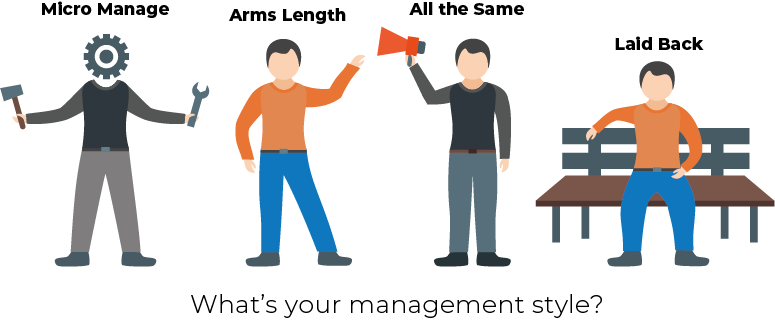
First, identify your current approach to contractor management. There are many identified management styles, and we’ve identified 4 styles we often see when it comes to managing contractors.

Chances are your style will be a combination of these, with your own unique nuances. But, categorization can be a useful way of identifying ways you can improve.

MANAGEMENT SYSTEMS

The “micro” Manager

You likely spend a lot of extra time with your temporary staff. They don’t know the company, have the experience with the project, or have connections with the rest of the team, so they need a helping hand, right?

On the plus side, your contractors will fully understand the brief, know what you expect from them, and feel like they can come to you for advice. However, if you spend too much time micromanaging, they’ll feel as though you underestimate and dont trust them.

Having you breathing down their neck every 5 minutes will make it impossible for them to get the job done, and bringing in an expert is pointless if you’re going to redo all the work yourself.

The “arms length” manager

Contractors are there to do a job and you’re inclined to view them as a commodity. Chances are you don’t spend too much time with them, don’t want to deal with any problems from them, and generally don’t want to be bothered by them in any way.

Although this leaves the contractor with a lot of space to get their work done, it’s unlikely to lead to a good relationship with them, and they may even come out of the contract feeling under appreciated.

It may also take the contractor longer to grasp what’s expected of them, which can lead to mistakes and delays further down the line.

The “all the same” manager

You handle contractors as you would any other member of staff. You’re the manager, they work for you and you set the rules.

By not treating contractors differently, they may find it easier to blend in to the rest of the team, however you must recognise that your relationship with them is different. In most cases, you need the contractor as much as they need you, and if they aren’t happy they can leave and find another contract without a second thought.

They also have different concerns and desires than an ordinary employee. They have to juggle different demands, such as managing their own taxes and benefits, as well as planning for their next contract.

The “laid back” manager

You take the approach that when a contractor comes in, they’re the expert and will make the right choices for your team. You’re unlikely to question their decisions or double check what they’re doing, and you may find yourself relying on them to direct the project.

While this approach can help you get the most benefit from your contractors knowledge and expertise, you may find yourself losing touch with the project and the rest of your team.

While the majority of contractors are incredibly professional, they are still people and mistakes can happen. It’s important to keep an eye on what they’re doing and maintain authority over the project, so that you’re sure the project gets completed to the highest standard.

Make a Change

Once you’ve recognised your management style (or possibly just identified some of your behaviours) you can begin to make small changes. Our top tips can help you improve your relationship with your contractors.

Understand their Motivators

As you’ll already know from managing regular staff, everybody has different motivators that drive them to do well. Contractors are no different, but their motivators often take on a different form.

They are unlikely to be incentivised by traditional motivators such as stability, corporate perks or office atmosphere/ environment. A contractor will find more value in experience, training and financial remuneration.

That’s not to say that other factors aren’t important, but taking the time to get to know your contractor and discover what they care about will make it much easier to motivate them down the line.

Communicate Clearly

A contractor wants to provide a good service, as this is how they build their reputation. Communicating clearly will not only help them deliver what you need, but can also help prevent future frustration and a breakdown in the relationship.

Make sure you have a clear brief ready for when a new contractor starts, and set aside the time to discuss it in detail with them. After that, you should try and schedule in regular time to check in with them. This can be as formal or informal as you like, but it should be regular enough to allow you to pick up any miscommunications early.

Build a relationship

Although you don’t need to invest the same level of time into a contractor as you would a permanent employee, you should still try and get to know them on a personal level, as this can make it easier to reach out to them in the future.

As well as your own relationship, you should invest some time into making sure they build a relationship with the team. Try to avoid singling them out from the rest of the team. This can be as simple as sitting them with everyone else, inviting them to important meetings and allowing them access to the same onsite perks (free breakfast, gym membership etc).

Don’t micromanage, but do give feedback

Finding the right balance here can be tricky, but try thinking back to what you know about a contractor’s motivators. Their choice to be a contractor means they likely crave autonomy, however, they will also be constantly looking to improve themselves to increase their value.

Give them the space they need to do their work, but be direct and honest with them. If the work is taking too long or isn’t up to standard, let them know in a constructive way, and give them the chance to fix it before jumping in.

Pay fairly

While this is most likely arranged long before you get the contractor in the office, the way you pay your contractors can have a big impact on how you manage them.

As we know, remuneration is important for contractors. You get what you pay for, and if you aren’t willing to offer market rates you’ll struggle to find people with the right level of knowledge. You may also find that you get a bad reputation amongst contractors as a stingy employer.

If you value the work someone does for you, make sure their paycheck reflects that.

Track the Impact

There’s no point putting the work into making a change if you can see its benefit.

Remember the two key requirements for any successful change.

  1. Keep it simple
  2. Make it tangible

In order for something to be tangible, it should have a clear end goal. This will differ depending on your own personal or business goals. It may be that you want to increase contractor retention rates, see an increase in productivity, or improve employee satisfaction.

Try and decide on a way to measure progress towards your goal early. It may be as simple as monitoring your average contract length, or it may be more in-depth.

For example, a weekly NPS score for those involved in the project. This simple measurement (skewed 1-10) will give a great litmus test to how people rate the contractor’s progress.

Share this post

I’d love to hear how you go about managing contractors within your team, and if you want anymore advice about managing your teams, you can download our free ebook, How to Increase the Value of Any Contractor: Get More for Less.

Recruitment and AI

recruitment and AI

Business and personal solutions involving the use of Artificial Intelligence (AI) are emerging across nearly all industry sectors. But what does this mean for recruitment? As it turns out, a huge amount, and whether you are a hiring manager, a recruiter or simply a happily employed worker it’s likely to directly affect your life in one way or another over the next few years.  

AI vs Machine Learning

The terms ‘artificial intelligence’ and ‘machine learning’ are often used interchangeably, but if you really want to get your head around emerging technologies it’s important to understand the difference. According to Bernard Marr:

The most exciting new developments are  focused on machine learning. That is, software designed to read and interpret past data (and the decisions made around it) and to use that knowledge to make or shape decisions for the future.

A simple example can be found in your own inbox. If you frequently mark emails of a certain type or from a certain sender as spam, the system will learn this behaviour and begin to do it automatically.

Machine Learning can lead to software making predictions based on correlated data. For example, forecasted bad weather may cause a spike in sales of winter coats, which is particularly useful if you are a clothing retailer.

Machine learning can also provide entirely new ways of doing things such as automatically generating personality profiles based on an individual’s social media posts (as opposed to relying on questionnaire results). Finally, machine learning can share big data, where thousands (or millions) of inputs help to create accurate predictions by responding to different stimuli. This is how Google’s algorthims can now predict what you are trying to write when you have only just started typing a sentence.

Applications in Recruitment

There is a huge amount to consider, when investigating the potential of AI in recruitment (for example video interview platforms that can automatically assess voice quality, energy levels, body language as well as the answers given to tricky questions) but, we want to focus on what is currently available, and already being used by  recruiters.

Sourcing Applicants

AI is increasingly used in the sourcing of applicants, with the development of software that scans the internet for online profiles. These tools read and interpret the profile information to identify matches against a predefined job description. As well as software reviewing ‘active’ information such as job boards, the latest developments in AI can now look at ‘passive’ information such as Linkedin pages, facebook and twitter feeds, about.me profiles, blogs, personal websites and so on, to build a comprehensive profile of a candidate who may well not be looking for a new role.

Software that identifies passive candidates (people who are likely to move but not actively seeking new employment) and estimates how attractive they might find the new company can actively learn from human feedback. For example, if the system matches someone who is not a suitable match, it will ask for an explanation to avoid doing the same thing again.  

This can be incredibly useful for recruiters trying to find highly specialised or difficult to source candidates.  

Screening Applicants

Once a selection of candidates have been sourced, one of the most time-consuming tasks can be to screen them all. Not only is this a laborious and administrative heavy task but when you have a large number of CV’s to get through human error or bias often means that strong candidates are missed.

Software can use machine learning to scan through CV’s and match specific skills and experience to the job description by pulling out keywords, dates, job titles and time in roles. Once candidates have been shortlisted, automated assistants or chatbots (like Recruitment Bot) can be used to carry out the initial stages of interview screening, by gathering key information such as an applicants right to work in certain areas, clarifying key skills, or even just checking their availability for an interview.  

As far as this technology goes, many large recruiters are already using some version of chatbots, and both employers and job seekers alike seem to find it effective, with responses that sound human and the ability to recognise the answers needed.

AI creation

Engaging Applicants

Various AI functionality has also been created to help recruiters engage talent. So, once AI has highlighted the right candidates and assessed their likelihood to engage with an opportunity, AI systems can also handle the initial contact. This intial approcah can be combined with answering simple questions the candidate might have and keeping candidates engaged with a role anytime of day.

AI systems will often be able to synchronise across multiple systems, such as email, chatbots on your website and even facebook messenger. The AI will be constantly finding the best ways to communicate with your clients.

Want to know what your potential applicants will make of AI tools? Check out this great article on the candidate’s perspective.

What are the risks?

Like with any new technology, there are risks that come with AI solutions.

The first thing to note is that with a lot of this new technology, there’s a good chance that it may not work exactly as you imagined it.

Learned Behaviour

The very concept of machine learning means that it adapts its behaviours based on what it learns from the data provided, so one thing to be aware of (especially with chatbot services) is that the users will influence the behaviour of the technology.

I’m sure many of you will have heard of “Tay” the AI Twitter bot created by Microsoft in 2016. Soon after it’s release, interactions with other Twitter users caused the bot to start producing racist and sexually charged tweets, leading to it being suspended.

Although ‘Tay’ was just an experiment, it also provides a valuable lesson in the potential pitfalls of machine learning bots and the importance of monitoring the information that is fed to them.

AI office

Saving time/ resources

Although many people may see AI technology as a fantastic way to save time, in the early stages this may not be the case. With the technology in its early days, you may find that you spend as much time monitoring and maintaining the software as you save with the job.

Even when the software is running as intended, it is fairly clear that we are not yet at a stage where AI can fully replace human recruiters. So while you may save time for the recruiters and hopefully improve their efficiency with these tools, it will still be important to value the significance of a human touch point.

Next Steps

Whether or not you choose to implement AI software into your current recruitment process should depend on what level your recruitment is at currently.

If you already have a large in-house recruitment team (or are a recruitment agency) and you’re looking for software that can help you automate certain process and improve your efficiency, there are some great solutions that involve machine learning that can benefit you.

If your recruitment team is made up of only one or two people, there may still be some solutions you could introduce slowly, but it’s important to make sure that you’re not creating more work for your team. For a recruitment team of this size, you may also find a lot of the new software to be outside of your teams budget.

If you currently outsource your recruitment and were hoping AI might be a solution to bring it back in-house, the reality is that the tools are not at this stage yet, and even as they develop they will require a lot of attention and maintenance.

Overall, there are a variety of different tools that you may find useful but it is also incredibly important to make sure this software is monitored, as the effect of ‘bad learning’ could have wide spreading consequences (here’s another example regarding Amazons recruiting tool).

For most teams, it’s probably still best left to established recruiting companies to use the software to help find the best people for your team, as they will be able to pair the software with the experience to make sure you get the best candidate, every time.

Share this post

5 ways smart recruiters find the right agile resource

5 ways smart recruiters

 As part of our Future of Work series we’re looking at what it takes to find, manage and retain agile talent. The following is from our comprehensive deep dive on building agile teams, which you can download for free here.

These days, those involved in recruitment need to look at what a person can bring to the organisation, regardless of their qualifications and experience. This is especially important for an agile team. Hiring managers also need to ensure their offer is attractive as possible, and that goes beyond money.

ClearHub spoke with Talent Acquisition Partner for Shop Direct, Simon Halkyard, to get some insight on hiring the best tech talent. Here are five ways in which this can be done:

1. Defining the job, not the skills needed to do the job.

Before beginning the sourcing process, have a session with the people who will be involved in the hiring process to identify the actual job requirements. This should include at least five objectives — actual deliverables that need to be achieved. Skills shouldn’t be ignored of course, especially for technical roles. The tool-specific skills (e.g. Jira, AWS, Java) of the ideal candidate should be considered.

2. Experimenting with different hiring methods and tactics.

Unless outsourcing to a service like ClearHub, whose resourcers already do this kind of activity, there are numerous tactics to consider as part of the hiring process. Due to high competition, organisations have to appeal to passive candidates, as well as active job seekers. Here are some examples of tactics:

  • Pay to post the role on a relevant job board or aggregator site
  • Headhunt candidates using LinkedIn (paid options offer more access) and other platforms
  • Use an internal referral scheme
  • Attend job fairs
  • Network at IT events
  • Participate in forums and other online channels
  • Paid digital advertising (e.g. Google, social media)
  • Offline advertising (e.g. billboards, tube, print media)
  • Email marketing and direct mail

3. Focusing on mindset and values.

For an agile team, recruiters look beyond a person’s CV and are careful that the CV doesn’t limit them from meeting great candidates. This should also be factored into the interview process.

The key here is emotional intelligence (or EQ). EQ is the capacity of an individual to recognize emotions – their own and those of others. Teamwork and communication is essential for an agile team, and a key component of productivity, so questions that unlock such information should be considered. Organisations often use personality profiling for existing teams, and in their hiring process, to ensure a good fit.

4. Give the candidate what they want!

A simple, yet often overlooked aspect of hiring that is especially important for tech roles. If someone is the right fit, smart recruiters make sure they sell the role.

As Simon explains, offering flexible working is a no-brainer when trying to attract the right talent: “Candidates are not asking for flexible working, they are demanding it. In a candidate driven sector such as tech you nullify a huge amount of candidates if you dismiss this as a fad or temporary. Flexible working is here to stay and just like we do with customers we need to listen and adapt to the needs of candidates if we are to hire the best ones.”

5. Being open and honest.

Hiring the wrong person is expensive (ClearHub discovered as much in a recent study) so ensuring the hiring process is a dialogue, rather than a one way conversation, is important. Being open about the organisation’s culture, team structure, any upcoming changes, expectations and the frequency of change, for example, will avoid any future disruption.


Want to learn more about building an agile team? Download our free ebook: The future of work: building the agile team of tomorrow

In it you’ll learn:

  • Tangible advice on hiring the right people for your agile team.
  • Insight on how to ensure your team can collaborate better, while maintaining agility, regardless of their location.
  • A hot take on distributed teams and how you can utilise the human cloud to hire specialist talent, with expert advice from Atlassian.


Share this post

Hire for Attitude: Train on Skill

hire

Recruiting used to be interrogation-style: Candidates would send in a CV, get invited for interview and, (if they were lucky!) offered the job.

It’s point was to find the most skilled person, fit for the role.

But, today there are missing elements to this method. Over the last few years, ‘hiring manager’ friends I’ve spoken to have all started to say the same thing:

“I prefer to hire for attitude, rather than skill.”

Thanks to the gig economy a greater focus on attitude, and the impact of new technologies on the younger workforce, your recruitment needs are changing – fast.

That’s true if you work at big corporations, (like I have for 15 years) – or if you work for smaller companies – like some of the businesses we’ve helped here at ClearHub.

And I can see why: Only 19 percent of your new hires will succeed in the long term. And of those – a full 89 percent – will lose their job due to their attitude or personality.

Don’t get me wrong: I’m not suggesting that you should ignore a candidate’s experience. But if you are looking to hire, it’s in your best interest to put as much focus on their attitude as you do skill.

Imagine how many more business goals your software development team will meet if you increase team retention rates by 10%, or even 20% – simply because they all get along.

Of course, this raises questions:

What if you find a candidate that is culturally perfect – but, who is  lacking in a specific skills?

Or – worse still – what if your mission-critical project calls for no time to onboard, upskill and train them?

The good news is: I’ve found a solution.

Great teams thrive on trust

We all know that the best companies are made up of great teams.

But what you might not know is that hiring someone who’s not an ideal cultural match for your team, is the number one reason why recruitment managers are changing their mindsets.

A couple of years back, I read this Google survey on team effectiveness.

The researchers found that what really matters for your teams to work effectively, is less about who is on it, and more about how they work together, instead.

As you can see, teams that feel safe to take risks around their team members (without fear of peer judgement, or ridicule) perform the best.

That’s also why 84% of employees agree that meeting the team, is one of the most important parts of the onboarding process.

In fact, happy employees are also up to 20% more productive than unhappy employees,

So it only makes sense that you should prioritise attitude.

If you’ve already got a happy and motivated team, why would you risk losing them by putting all of your effort into hiring someone who is the wrong fit?

Especially when there are now so many candidates to choose from.

The gig economy is changing everything

The gig economy isn’t just a buzzword – it’s changing the way your teams get their work done.

And those changes are here to stay. By 2020, it’s estimated that freelance workers will exceed 40% of the workforce.

In addition to helping increase the speed of your project work and plugging specific skills gaps in your teams, the gig economy can help you find a team member with the right attitude.

Ask yourself this:

How often do you hire a contractor that fits seamlessly into the team?

I’m guessing that it’s not very often.

But, if you had access to a smart profiling system, with communication tips and preferences,  as we’ve developed at ClearHub, you’d have the ability to do this.

Plus, the better the fit, the greater the chances of your team wanting them to return for  future projects.

Candidate attitude is key

You just need to find someone who seems to fit with your team and has a willingness to learn some new things.

Easy, right?

Apparently not: The complication  most recruiting managers have with hiring for attitude is that it’s pretty ambiguous.

Ask yourself:

What type of personality do I need in my team?

In ClearHub, having energy, compassion and creativity are all key markers of success; as we’re focused on finding the right IT contractors for our clients.

When you identify the right attitude in your next hire, you’re identifying what your team needs to meet their goals, first.

You might find that’s a necessary change in pace, and a reinforcement of what’s already been working is all you need.  Either way, your hire will be filling the gap, as intended.

Plus, by making your team happy, you will increase your productivity.

Conclusion

When I hire people, I’m not hiring a job description.

I focus on attitude, and it almost always get me a hire who fits in with my current team. Better yet, it usually means I’ve found someone who is ready to jump in and learn the skills that will help my product grow. In return, I cultivate their passions and applaud their experimentation.

With the high costs of staff turnover, you need to focus on cost-effective recruitment methods. Hiring on attitude, as well as skill, is the best way to do this.

First you need to focus on making your current team feel safe and happy. Next, you’ll have to come up with a way  for them to feel included in the hiring process.

If you adopt this idea, you’ll see a happier, more motivated team, and a new hire that will need very little time to settle in.

What are you doing to make sure you hire the right candidates for your team?

Share this post

The Cost of the Skills Gap – and How You Can Solve It

There is a skills gap in the UK economy that costs companies over £2 billion a year.

The Open University study highlighted that, due to this, employers plan to change the training they offer.

Most significantly with more apprenticeships.

Yet, in the first quarter of 2018, growth in the British economy slowed to just 0.1 percent – and employers are being warned that the skills gap may be to blame

It is Far Harder to Find the Right Candidate Now

The skills gap is the gap between the roles and skills that employers are looking to hire, and the skills of people looking for jobs.

There are several factors that contribute to the misalignment of open positions with available, skilled workers.

The first is that the UK currently has its lowest unemployment rates in over ten years – so, there are less people out of work.

Secondly, those in your employment may be reluctant to leave: Due to uncertainty from Brexit – also a deterrent for EU nationals – who may have looked to work in the UK.

It Takes Longer to Fill Job Roles

75% of employers say that filling job roles has become a problem for them.

Companies are losing money through recruiting fees and the cost of temporary staff.

In addition, some skills are in more demand now then they were; particularly in highly specialised areas; such as technology and software development.

Of course, candidates with these skills are in high demand – and command a higher salary.

For both your businesses and the economy, the skills gap could lead to a lack of productivity, innovation and growth – as more jobs and industries become heavily dependant on digital skills that are in low supply.

“In order to navigate this changing landscape, you will need people who possess the right skills to maximise on digital resources. Unfortunately these individuals are paradoxically both in short supply and in incredibly high demand, creating an expensive and difficult dilemma for employers.”  

Onrec: 2018

The Steps Needed to Help Your Business

It may seem as though the skills gap is a problem to tackle.

Your business will be the first to feel the effects – so you should be proactive in becoming part of the solution.

Government must lead the way on this, but it will be up to both the businesses and the academic institutions across all levels to show commitment and support for government efforts to narrow the skills gap.”

 Uktech: 2018

An important step you should be taking is to assess the skills in your teams – to identify any gaps early. Once you have, you’ll know what to start focusing on.

Need any help identifying your skills gaps? Check out our free, quick and easy 5-step checklist to help you do just that!

Many businesses are already taking steps to building the skills they need for the future. With apprenticeships and internal training to help fill the gaps.

Admittedly, these provide a slightly more long term solution.

What should you do if you’re already feeling the effects of the skills gap in your business?

More People than Ever are Freelancing

Due to the growing ‘Gig Economy’, more and more highly skilled professionals are turning to freelance work.

“The new modern way of working for British industry is the answer to this problem. Employers are increasingly turning to contractors and freelancers to deliver the skills they need and that means there are a wealth of opportunities for self-employed people.”

DANBRO: 2018

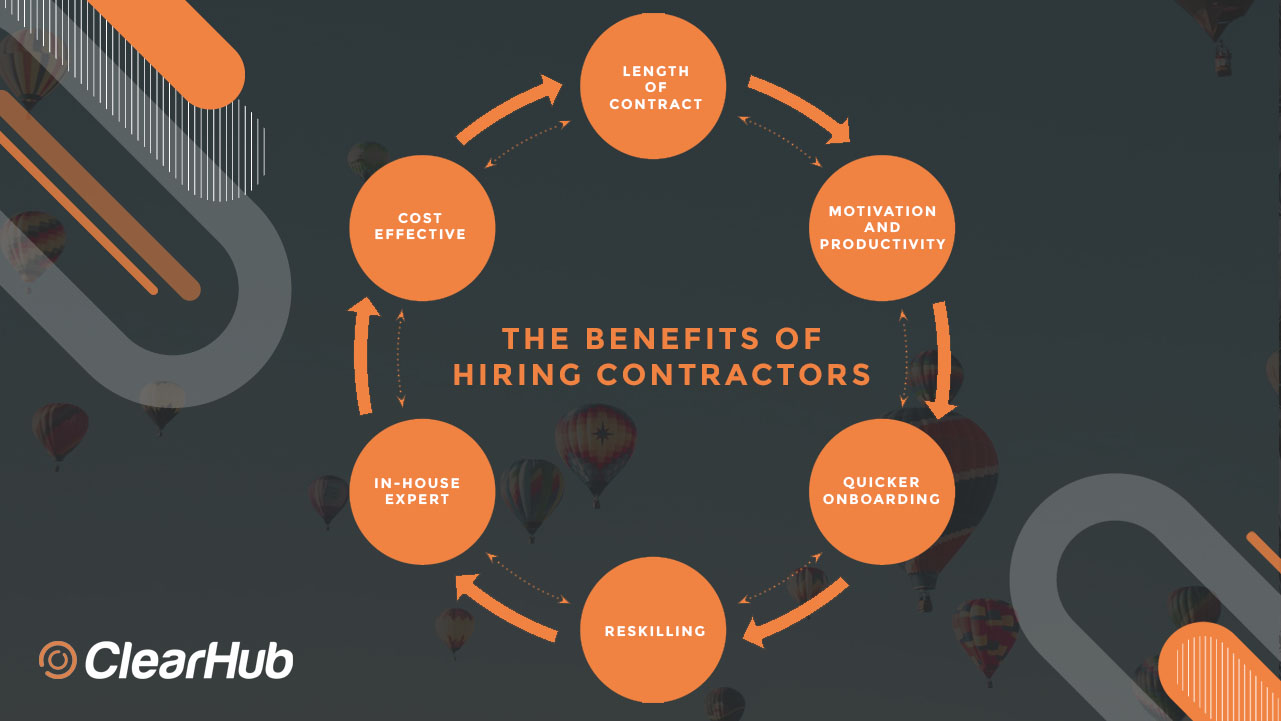
Evidence shows that you’ll have a better chance increasing the speed of production by finding a contractor who fits your organisation than you will by up-skilling a full time employee. Here’s why:

  • Contract length – you set the contract to fit you and your projects.
  • High motivation – as their next job will depend on good reviews, contractors are often highly motivated.
  • Fast onboarding – contractors are used to coming into new organisations.
  • Reskilling – they’ll be self-driven to learn and sharpen their skills
  • In-house expert – working with together, contractors can help advance the skills of your existing teams.
  • Cost effective – the perceived cost risk of hiring contractors over permanent staff is slim (once you factor in benefits, pension schemes, holidays and so on).

By using contractors you are also giving these professionals the chance to build experience in their skills, and so encouraging them to grow and develop skills that are high in demand.

“Most high-demand careers need only minimal formal schooling to begin entry-level freelancing, and the portfolio of work and recommendations gained from working in the gig economy are at least as valuable as a degree or job training program.”

Quartz at Work: 2018

The-benefits-of-hiring-contractors

Match Your Team and Your Culture

At ClearHub, we have a global network of technical contractors.

When we match you, we look at the skills you need, and then use Smart Profiling to make sure they’re a powerful cultural fit for your team too.

Get Ahead of Your Competitors

Being aware of the skills gap, and being proactive about it early, gets you ahead of your competitors – by getting your products to market – fast!

But, it can also help to future-proof the growth of the economy.

With World Youth Skills Day coming up (July 15), this topic is more relevant than ever.

It is up to us as employers to help encourage young professionals to follow the career paths that will help our economy to grow.

And, by offering them the opportunities to learn – through work experience, apprenticeships, and freelance work – you can guarantee your company’s future alongside theirs.

Do you currently use technical contractors to fill your skills gaps? Leave a comment below –  I’d love to hear your thoughts!

Share this post

What Everybody Ought to Know About The Real Cost of Employment [Infographic]

Many modern businesses underestimate the true cost of their workforce.

And, I’m not just talking about the direct cost of staff employment. It includes wages, training, tax and benefits.

But – are you overlooking the indirect costs?

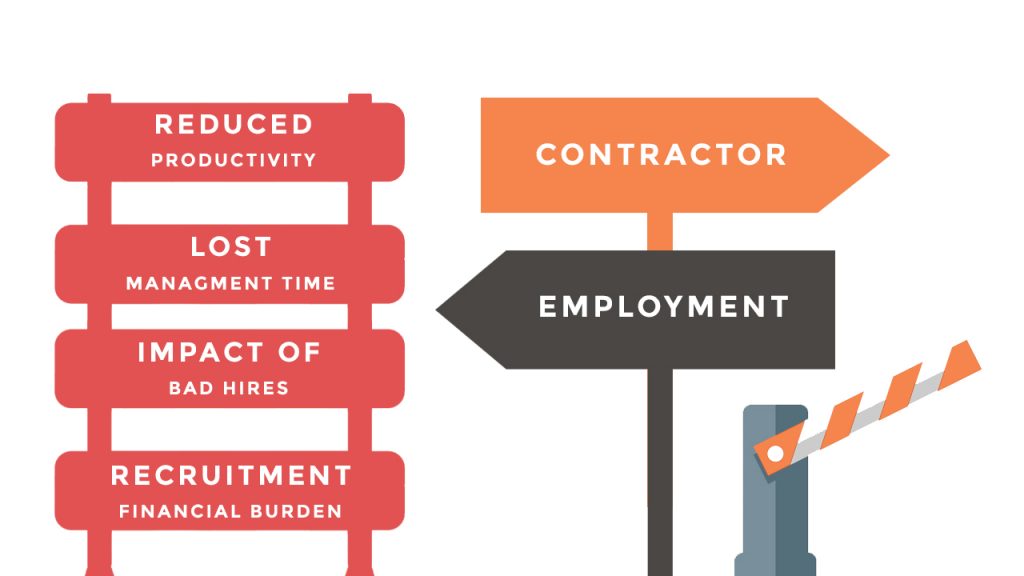
The financial burden, the impact of bad hires, poor leadership, reduced productivity cycles and lost management time could open a door to employment alternatives you may previously have thought expensive.

After all, the rise of the global workforce, virtual assistants, artificial intelligence, collaboration tools, agency contractors and freelance workers mean that hiring managers have never before had so many alternatives available to them.

The Future of Work Belongs to the Freelancer

Do you assume that contractors are highly-skilled specialists, used for short-term bursts of focused work – whereas employees are loyal, tend to have more transferable skills and are less expensive?

So did I.

I realised that as the contractor market continues to grow, and entire sectors are disrupted by gig economy workers, the lines between employment and contracting are harder to see.

The arguments between choosing one over another were not as simple as I first thought!

First, I addressed the issue of ‘up-front’ cost:

The average cost of a software developer with ten years experience in the UK is £42,000 a year.

The average cost of a software developer contractor in the UK (excluding London) is £385 a day.

Average UK employees work 229 days a year.

So – if we take the contractor day rate of £385 and times it by 229 days – we create our opening position:

Simple Price Comparison for a Software Developer 

  • Employee (annual salary) = £42,000
  • Contractor (for a year) = £88,165  

On first inspection, the maths shows a stark difference: Contractors are more than twice as expensive as permanent staff.

However this crude comparison does not even start to tell the whole story.

The Hidden Costs of Employment

You must consider the full cost of employing staff versus the real cost of contracting.

Let’s group everything included in the cost of employment – and compare that to everything included in the cost of contracting.

Additional costs typically include bonus payments, employee benefit packages, tax contributions and admin support.

Average Employee Costs UK

Recruitment Costs (employee premium)£3,000
Bonus and KPI (contractors N/A)£2,000
NI Contributions (contractors N/A)£5,000
Pension (contractors N/A)£1,000
Training (employee premium)£1,000
Overhead Costs£5,000
Absence/Sickness/Holidays (Employee only)£4,000
HR/Benefits and Other (Employee only)£4,000
Total Cost£25,000

You can see that by adding the associated additional costs of employment, the gap between the two is hugely narrowed:

  • Employee (salary plus costs) = £67,000
  • Contractor (for a year) = £88,165   

Research shows the calculations do not stop there…

The average time to recruit in-house or through an agency for a full-time person is 11 weeks, according to QUARSH.

If you use a contractor matching service, such as ClearHub, this can be as low as two to three weeks…

…and you musn’t forget another massive hidden cost.

Business Impact Cost

Quarsh estimates that the cost of lost productivity is £7,800 on average, across all industries.

As software developers are paid almost twice the average national wage, it is fair for us to assume this cost is also higher. 

Cost of New hire (impact on business)

Average Interview Cost£1,000
Average Onboarding Cost (not inc training)£1,000
Management Time£2,600
Productivity Lost (speed Vs Contracting)£7,800
Sub Total£12,400
Adjustment vs Average (55%)£6,820
Total cost of new software developer hire£19,220
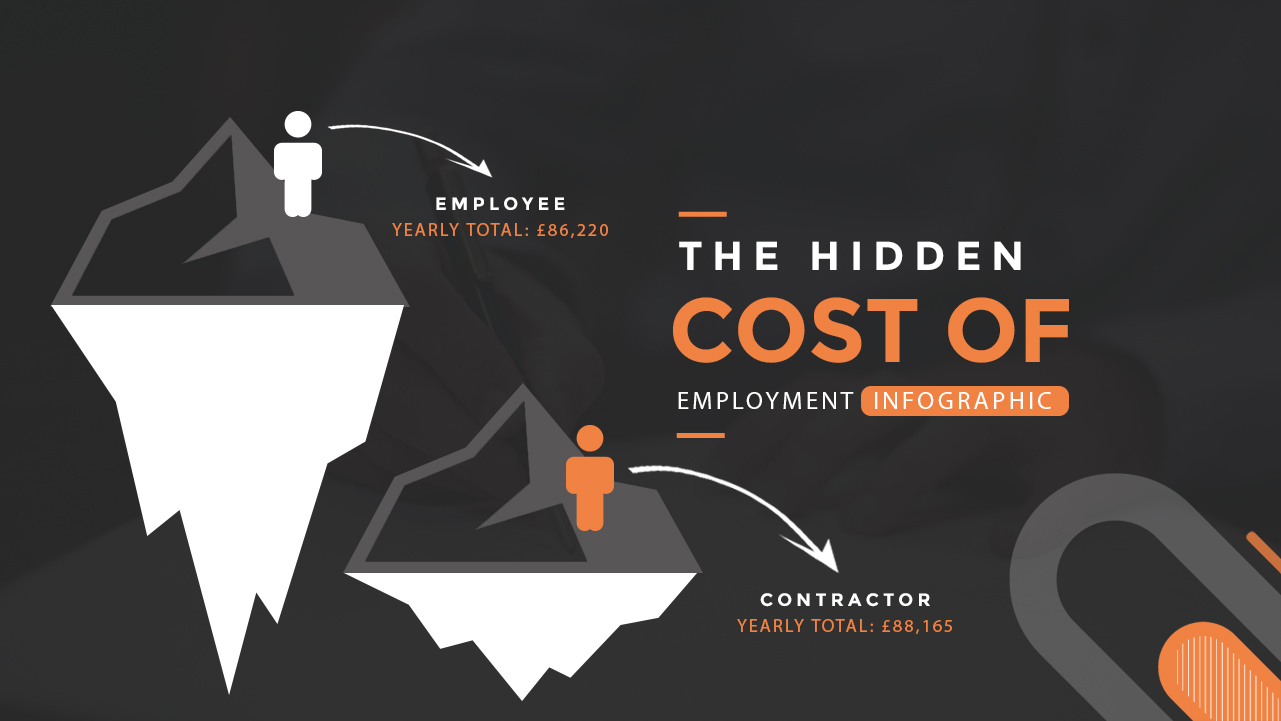
  • Employee (salary plus costs, plus new hire costs) = £86,220
  • Contractor (for a year) = £88,165   

Now we have reached a true price balance.

Once you add all the costs of employment AND take into consideration the impact of hiring on the business, the cost savings do not exist.  

But – this is based on both the contractor and the employee being hired successfully.

That’s quite an assumption!

The Cost of Unsuccessful Recruitment

As many as two in five new recruits are later deemed not right for the role, according to Collingwood.

Most good technical contractor providers (such as ClearHub), offer a free ‘switch out’ service if your contractor fails to fit your need.

The same can not be said for your employed staff.   

The figures for the UK are pretty alarming:

  • 62% of employers reported a bad hire [within the last 12 months]
  • 27% of companies say a bad hiring decision cost them over £50,000
  • 23% of employers reported a loss of productivity
  • 22% negative effect on morale
  • 16% negative effect on customer relations
  • 12% reported fewer sales

You can see how extremely difficult it is to estimate the costs of bad hires.

UK businesses are failing to hire the right person for two out of five roles – and that’s despite the significant financial costs of making mistakes.

And the negative impact of ‘bad hires’ affects employee morale, client relationships, sales, IT and productivity.

So, how do you factor the cost of this?

One fifth of all employees fail to pass their probation periods according to The Telegraph.

If we add the average cost of recruitment to the impact of new hires on business we end up with a total of £22,220 – one fifth of this is £4,444.

  • Employee (plus costs, plus new hire cost, plus re-hire costs) = £90,664
  • Contractor (for a year) = £88,165
emplotment-vs-contractor-sign

(At this point, I feel that it’s important to say that this is not just a UK trend. Here’s a similar comparison for the US market.)

What do these costs mean for your business?

Of course, this doesn’t mean your traditional employees are the wrong choice for your business. You must still consider your individual circumstance.

But – once you understand price balance – you can consider the full benefits of both contracting and employment to your company. And make the best decision.

Full comparison of the advantages and disadvantages of recruitment versus consultancy

Whilst I know that plenty of assumptions in this article can be challenged, the overriding theme is conclusive:

Most business drastically underestimate the cost of recruitment and significantly overstate the cost of consultancy.

This is a BIG mistake as it forces poor management choices based on flawed budgets.

In reality, vetted and qualified contractors can provide your team with a major knowledge and skills lift.


If you currently work in an office then up until now you may have been fairly insulated from the disruptive forces of the gig economy.

But, disruption in your industry is coming.

And it will be sooner and have a deeper impact than you probably imagine.

Discover more about how digital disruption is fueling the rising gig economy, or Click the image below to download the full “Hidden Costs of Employment” infographic.


Share this post

The Future of Work Now: Generation Y

The future of work depends upon embracing and attracting the younger generation into your business: Generation Y. If you are not proactively bringing this technically-savvy generation into your workplace, then you are not moving forward.

And we all know what happens when you don’t keep up!

Why Generation Y?

Embracing Generation Y, rather than resisting them, will yield a number embryonic positive culture changes.

Not only will the average age of your company come down, but you will notice a certain vibrancy in the office – where older workers will likely become rejuvenated and reinvigorated. Mixing young energy with mature experience, if managed correctly, becomes a very powerful drug.

Having the right balance of maturity and vibrant energy not only helps the business flourish but also provides an unexpected boost when it comes to selling or having a company valued.

It is important to match your companies average age with the sector you sell into, this is especially true for the technology sector. You might have the most amazing product in the tech market but if you have an ageing workforce, you are seen as a higher risk and thus less valuable.

Great Expectations

For the future of work, The Generation Y have very different expectations to the Generation X (X = the oldies amongst us; typically born in the 1960s and 70s, I include myself in the bracket – age 52). As Douglas Coupland, author of Generation X, JPod & Microserfs explains:

The nine-to-five is barbaric. I really believe that. I think one day we’ll look back at the nine-to-five employment in a similar way to how we see child labour in the 19th century.

The concept of rigid 9 – 5 will become old fashioned and irrelevant, especially when the “job for life” is no longer something people crave. One thing is for certain with Generation Y, you have to work very hard to retain them for more than a couple of years before their thirst for change moves them on. We have found that the best route for both parties is to enter into a two year ‘Tour of Duty’, see the Aliance book from Reid Hoffman.

What’s the Gig?

Research shows that Millennial’s now have less access to their own transport (only 35 % of under 20’s have a car compared to 43 % 20 years ago). So office location and its accessibility to public transport becomes an important factor. This is where Agile work environments become relevant. Enthusiasts of the Agile way believe you can work anywhere with the right collaborative technology and the right ‘open & trusted’ relationship between employer and employee. Creating a flexible working approach has proven beneficial to all. Research has also shown that two-thirds of employees would rather take another job to ease the commute or have flexible working. Furthermore, business find a decrease in unscheduled absences, resulting in increased productivity.

Two-thirds of employees would rather take another job to ease the commute or have flexible working.

Research confirms that 36% of people would choose working from home over a pay rise. A recent poll of technology professionals revealed that 37 % would take a pay cut of 10 % if they could work from home. The internet is shrinking the world and as a result, businesses now have access to a large pool of remote overseas workers. In the technical support industry it is no longer important for staff to be office based. This opens up many opportunities.

The Benefits of Hiring a Contractor

Whilst all these look like benefits to the contractor, there are actually very tangible benefits to the hiring company. A happy and fulfilled contractor is more productive, reliable and dependable. Then there is the price advantage of a remote contractor over a local employee. Even if the contractor is local, there are many commercial advantages over employed positions.

A happy and fulfilled contractor is more productive, reliable and dependable.

The Impact of Global Economic Change

Companies in the UK and USA (H-1B Visa) are in the throws of experience workforce challenges. Brexit is likely to see new barriers arrive which make it harder to recruit a foreign worker. The USA government is also actively reducing the number of foreign workers permitted into the country. There are two likely outcomes, staff costs will increase as we all shop in the same pond of limited resources or we move certain positions to outside of the country (use contractors).

Remote Working and Productivity

Such drivers added to the increasing cost of office space is pushing many companies to seriously rethink office expansion plans which allow remote workers to remain in touch with all aspects of the business whilst ensuring staff can remain productive. What is strange is the companies who faced the ‘remote’ workers challenge several years ago have seen productivity increases across the business, and not just remote workers.

If you are more than eight meters from a colleague, you are more likely to email them than walk to their desk

Digital Workplaces and the Future of Work

Research (http://danielcoyle.com/) shows that if you are more than eight meters from a colleague, you are more likely to email them than walk to their desk. So eight meters – or 800 miles – what is the difference! With so many organisations shifting to digital workplaces, it’s essential that we continue to understand ways that people can connect and seamlessly exchange information.

Digital workplaces allow people to communicate and collaborate beyond their physical locations. The technology that supports these virtual work environments can be anything from email, to instant messaging, document management software and social intranets.

Conclusion

Disruption is everywhere. Whether that be the way you order your taxi, how drones deliver your online order or how you travel to work (hint – driver-less vehicles). We are in a rapidly changing world and many believe we are on the cusp of the biggest disruption of all, the very nature of work itself. Staff, who make up the DNA of your company, are changing their expectations and requirements. Are you ready for your next recruit to be remotely located, short term contracted or even not employed at all? It’s time to buckle your seat belt, because you’re already there…

So what’s the future of work in your business? Do you use remote contract workers – and, would you consider it if you don’t?

Share this post

6 Compelling reasons to hire an IT Contractor Over a Full-Time Employee

Whether you are watching TV or scrolling through your social media feed, you can’t hide from the fact that everyone is talking about the Gig economy.

As a nation it would seem as though we can’t get enough when it comes to talking about work! And one topic which is coming ever more popular is whether or not to hire an IT contractor over an employee.

In this article I discuss what hiring a contractor could do for your business to help it grow and succeed.

6 Compelling reasons to hire an IT Contractor Over a Full-Time Employee

1. Open up your business’ flexibility

With today’s ever-changing economy and marketplace, hiring an IT contractor over a full-time employee can serve multiple benefits.

Contractors help to create flexibility within your business, whether they’re there to serve a specific purpose short-term or for a long-term project.

When employing a contractor, you have no obligations to carry the person on longer than you need them, compared to a full time employee.

A full time employee may have to change their role over time depending upon the journey of your business, and may end up in a position they’re not the best fit for.

2. Watch what you spend

Contrary to popular belief, hiring an IT contractor may not cost your business a considerable amount more money.

It’s no rumour that contractors can earn more than a salary employee, however when budgeting for a full-time employee you need to take into consideration more than just the annual salary.

A full-time employee may require training courses compared to a specialised contractor. Additionally full-time employment also require sick and holiday pay.

Once you total these costs compared to hiring an IT contractor, you can see the significant difference.

3. Productivity starts immediately

The 2016 Workforce Productivity Report, released by World Market and KRC Research, reveals nearly half of all business leaders believe that contract workers are more productive than full-time employee.

This is because a specialised contractor doesn’t require any training and is able to hit the ground running from the beginning.

A full time employee, on the other hand, will require an induction period, including training.

Comparing the level of high standard work may compare however on a timescale, the contractor will produce the work in a shorter time frame.

4. Cut your recruitment time

Hiring a full time employee can be a lengthy process.

Whether it’s a small business with higher management searching for them or there is a number of trained staff dedicated to recruiting new staff, a lot of time needs to be set aside for this.

Between writing and posting job adverts, reading tonnes of resumes to getting through the interview stages, you can lose hours of time that could have been spent on more productive tasks.

Often when hiring a contractor, you can go through agencies who have a rich pool of specialised contractors who have already been checked thoroughly and are waiting to be matched to you.

5. Reduce your commitment

When you hire an IT contractor, it can also be a good way to give a potential employee a “test run” without any of the commitment.

If you have been involved in hiring or working within a team we have all come across people who despite give off an amazing first impression falls short of expectations once they’ve been hired.

With contractors, there is no reason why you aren’t able to keep them on full-time or extend their contract if they show tremendous value added to your business.

6. Providing extra value

As stated, when you’re hiring a contractor, you’re hiring a specialised skill set and this could serve great purpose to your company.

A contractor can be beneficial to the existing staff of a business as the contractor can help train the existing workers in their specialised field.

Additionally,  showing them new methods of working which continues to encourage your business’ flexibility.

Share this post